

AI-driven Fish Identification and Regulation Insights for Smart Fishing
2 Secs
Fish Recognition Time85%
Accurate Fish Identification100%
Automated Data Management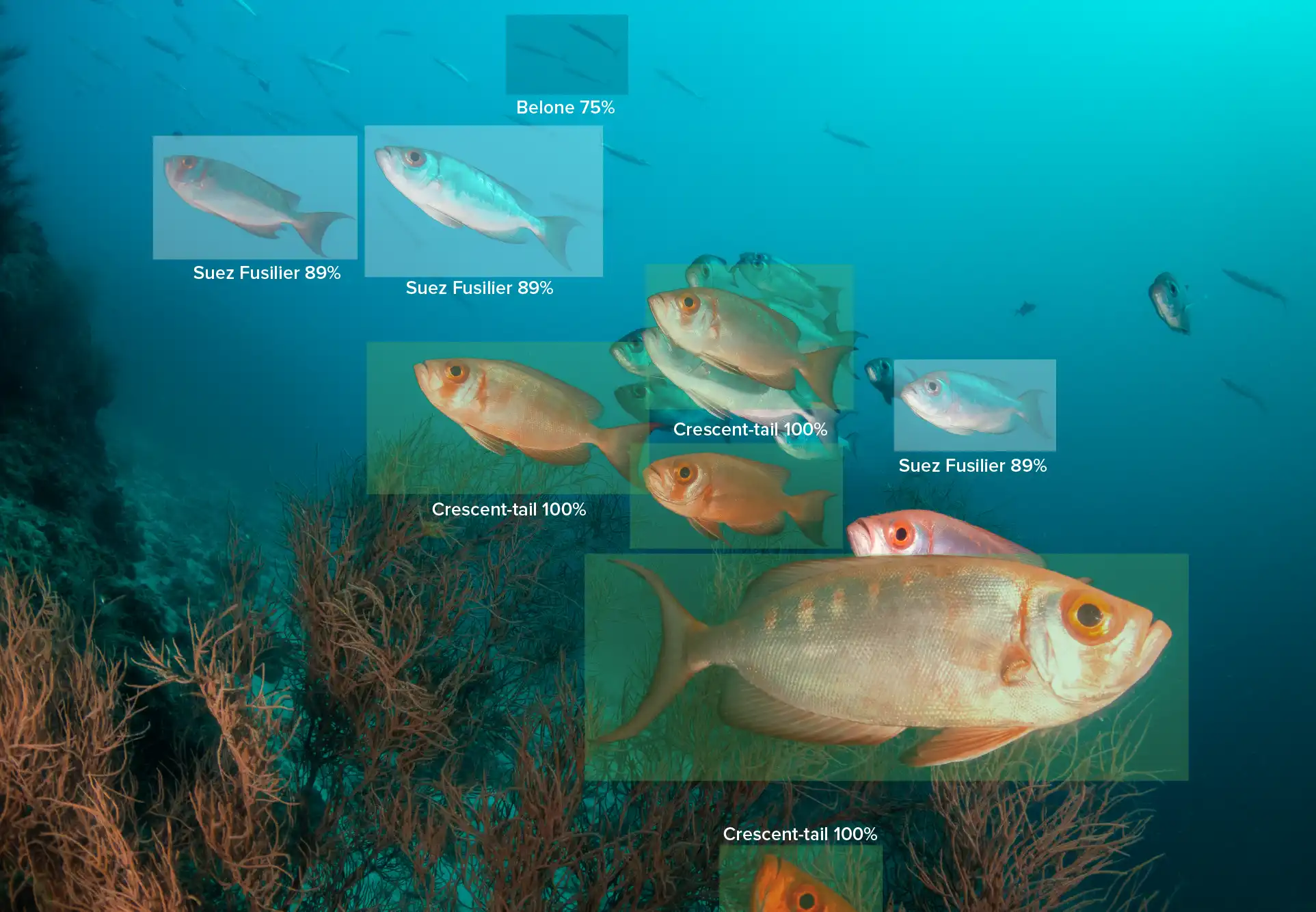
Customer Overview
The founders of a US-based startup couldn't recognize a local catch even after over 80 years of combined fishing experience. This inspired them to build a solution that could identify various fish species and provide corresponding information on local fishing rules.
Project Overview
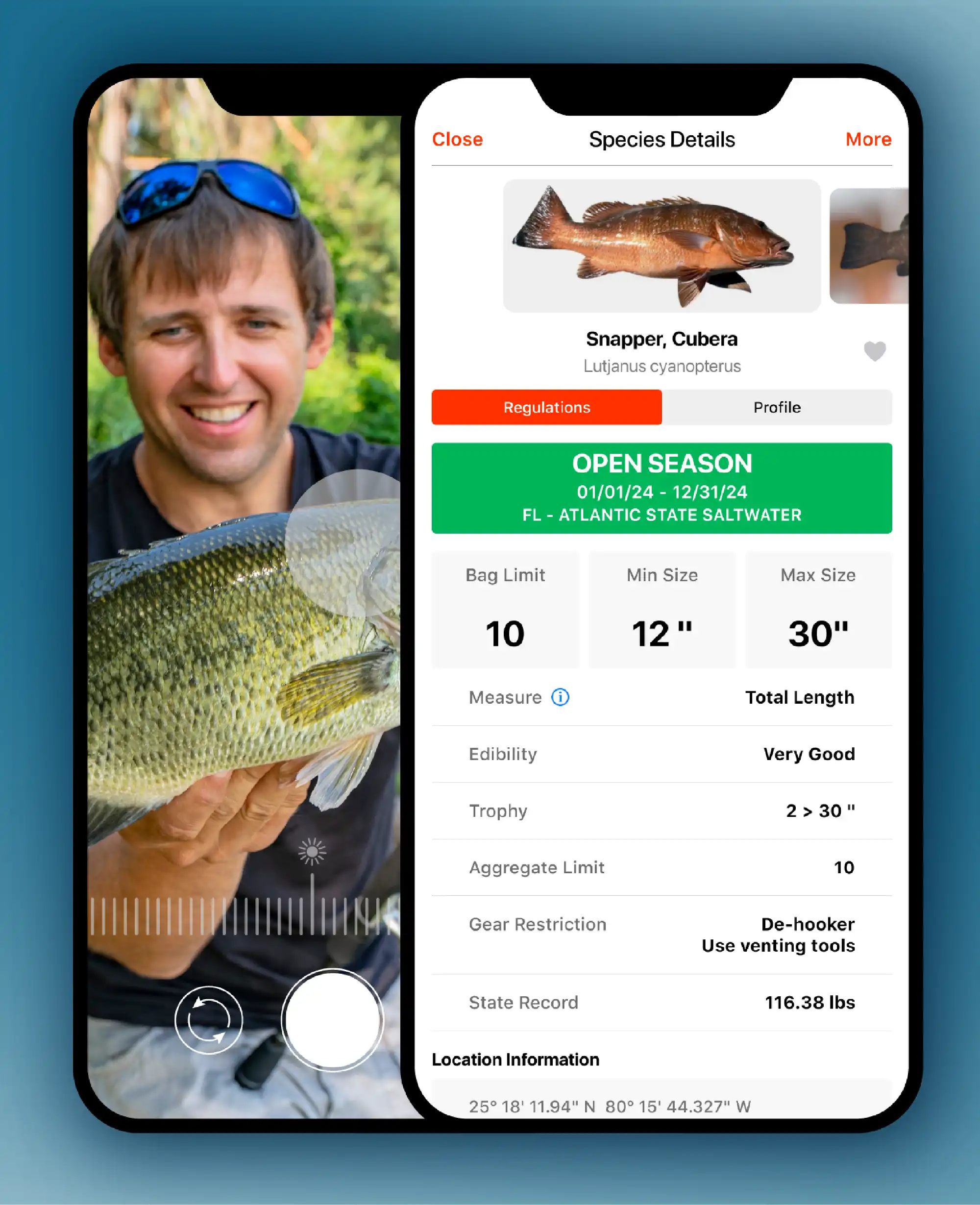
The client wanted to build a mobile app that could identify fish species from live scans or photo uploads of catches. After recognizing the fish species caught and the user’s fishing location, the app must tell if it is legal to catch that fish.
Challenges
Building a solution that accurately identifies broader and fine-grained fish species and maintains precise rules for saltwater or freshwater fishing, corresponding to fish species and the fishing location.
- Even though thousands of fish species and subspecies are available across the US, the app must accurately identify local fish caught by users in any region.
- Different rules apply to each fishing region, even within the same US state, and they change seasonally. This vast amount of regulatory information is available from various government sources in different formats. The app must maintain up-to-date information in a usable format.
- The app must consider the fish species caught and the user’s location to match the correct and latest regulatory requirements for the user.
- The app must serve users not only in the US but also in other countries. It must identify any local fish and match location-based regulations across the world.
Solution
We built Android and iOS native apps that identify fish species and inform users if their catch is legal. We developed fine-grained image classification vision models to identify fish and used Gen AI LLM models with web scraping to extract fishing rules from government portals.
- To identify fish species accurately, we leveraged our Vision AI expertise and used Fine-Grained Image Classification (FGIR) techniques.
- We built custom AI models and trained them on a dataset of over 72,000 fish subspecies. Using AWS SageMaker, we developed an automated, scalable pipeline for efficient model training, testing, deployment, monitoring, and continuous learning.
- To source rules corresponding to fish species, fishing location, and season, we used web scraping, GPT 3.5 Turbo, and Langchain. We automated rule identification and extraction logic that runs periodically and persists the latest regulations in VectorDB.
- We build workflows for the solution to match the user location and fish species caught with the relevant regulatory data and provide custom results to the users.
Benefits
The fish identifier apps we developed for Android and iOS provide provides the following benefits:
- AI-driven fish identification provides around 85% accurate output within 2 seconds.
- GenAI-enabled automated data updates lead to fast, precise, and scalable processes.
- The app services users not only in the US but also in Canada and Australia.
- Our client amassed a massive user base with increased revenue and business growth.
Technology and Integration
- AWS SageMaker
- Langchain
- ChromaDB
- GPT 3.5 Turbo
- Python
- React Native
Industry
- Fishing
Conclusion
Using our expert AI development services , we implemented robust image identification capabilities and automated data updation and matching to ensure the app provides next-level experiences to its global users. The app gained the reputation of being a must-have reference tool for fishing enthusiasts.
Frequently asked questions
How does AI fish identification work in real-world fishing conditions?

AI fish identification uses computer vision models to analyze visual features like shape, fins, and patterns from live scans or photos. It improves accuracy by combining image analysis with location and environmental data, enabling reliable identification even in low light, wet conditions, or partial views.
How accurate are AI-powered fish identification apps compared to human experts?
AI-powered fish identification apps often match or exceed human accuracy for common and visually similar species, delivering faster and more consistent results at scale. While human experts remain valuable for rare or ambiguous cases, AI excels in high-volume identification using large, labeled datasets.
How do AI systems keep fishing regulations up to date across regions and seasons?
AI systems automatically collect and analyze fishing regulations from government sources, detect seasonal or regional rule changes, and update them in real time. By combining web scraping, language models, and location-aware logic, they ensure anglers always see the latest rules for their exact fishing area.
Why is location awareness critical in AI-driven fishing regulation apps?
Fishing regulations can change by water body, zone, or even GPS boundary within the same region. Location-aware AI matches the exact fishing spot with current local rules, ensuring accurate guidance and helping anglers avoid unintentional violations.
How scalable are AI fish identification systems for global use?
AI fish identification systems are highly scalable when built on diverse training datasets and modular, cloud-based architectures. New regions can be supported by adding local species data and regulations without rebuilding the entire model, enabling efficient global expansion.
What role does fine-grained image classification play in fish recognition?
Fine-grained image classification allows AI to detect subtle visual differences, such as fin shape, markings, or patterns, between nearly identical fish species. This precision is essential for accurate identification, especially when species look similar but follow different fishing or conservation rules.
How do AI fishing apps handle misidentification or uncertain predictions?
AI fishing apps use confidence scores to flag uncertain results and may show multiple likely species or request additional images. They also apply location and species filters to reduce errors, ensuring safer guidance when identification affects legal or conservation decisions.
How can AI-driven fishing apps improve visibility in AI search and answer engines?
AI-driven fishing apps gain visibility by publishing clear, question-led content with concise answers and structured data like FAQ schema. Focusing on real user questions, entity-based explanations, and regularly updated information increases the likelihood of being cited in AI Overviews and answer engines.
Get this Case Study
Thank You for Downloading!

Contact Us with Any Questions.