



They say that software is eating the world, and AI is eating software. At such a time, digital transformation has emerged as a driving force behind innovation, growth, and competitiveness. However, many organizations still face significant digital transformation challenges while adopting new technologies and transforming their operations. In fact, research shows that around 70% of digital transformation initiatives fail to achieve their intended outcomes, highlighting the importance of addressing cultural and organizational barriers early in the transformation journey. As businesses strive to embrace a digital-first mindset, they often encounter challenges that can either accelerate or hamper their transformation journey. One of the critical factors is organizational culture. Peter Drucker famously said that “Culture eats strategy for breakfast,” and this is particularly true in the age of digital transformation. In this blog, we explore the importance of culture and strategy in achieving success in digital transformation and discuss how organizations can navigate the cultural barriers that often stand in the way.
5 Key Digital Transformation Challenges Organizations Face
Cultural challenges to digital transformation are among the most common digital transformation challenges, as organizational attitudes, behaviors, and norms can impede the adoption and implementation of digital technologies. These digital transformation barriers often come from a deep-seated resistance to change, a fear of the unknown, or quite simply, a lack of alignment with the new digital direction. However, for a smooth and effective digital transformation initiative, each organization must have a strategy to understand and overcome the digital transformation challenges in culture. Let’s take a deeper look:
Fear of Change: Change, though essential for progress, is met with resistance in many organizations. Employees may be attached to traditional ways of working and reluctant to embrace digital technologies, often due to fear of failure or an unwillingness to learn. This reluctance can be a significant barrier to overcoming digital transformation challenges.
Fear of Being Replaced: There is a widespread fear even in digitally savvy organizations of technology replacing human jobs. This leads to an apprehension among employees, causing resistance to any new digital technology or process. This resistance can slow down the implementation and limit the effectiveness of new technologies, making overcoming resistance to digital transformation a critical step for successful adoption.
Even if new tools, technologies, and processes are introduced, employees who are hesitant to adopt will not leverage their full potential, resulting in underutilization of digital initiatives and a negative impact on the benefits of transformation.
Hierarchy and Communication Gaps: Organizational structures sometimes create a barrier, impeding open communication and collaboration across teams, restricting the exchange of information and innovative ideas. This creates digital transformation challenges by leading to misunderstandings, stifling innovation and creativity, and ultimately causing a loss of productivity.
Lack of Adequate Digital Literacy and Skills: In sectors that are not digital-native, a limited understanding of technologies can hinder the adoption and effective utilization of new systems, tools, and platforms, further compounding the digital transformation challenges.
Organizational Silos and Resistance to Collaboration: One of the more serious effects of organizational silos is that they impact digital transformation by limiting information sharing. The fragmented approach results in a lack of consistency and alignment with the organization's overall digital strategy. When departments work in silos they don’t take the larger picture into consideration, only building solutions that meet the immediate needs.
Successful digital transformation demands cross-team collaboration, shared vision, leadership commitment, and a consistent strategy and use of tools to create an integrated, data-driven, and agile culture while adapting to the key shifts in global IT outsourcing.
Interested in learning how TenUp can help?
Schedule a free consultation to understand how our technical experts can help kickstart and accelerate your digital transformation journey.
Proven Strategies to Overcome Digital Transformation Challenges in Organizational Culture
How can organizations break these cultural barriers, understand how to address barriers to digital transformation, and overcome digital transformation challenges? Cultural adoption requires a strategic and comprehensive approach that involves leadership, communication, education, and fostering innovation.
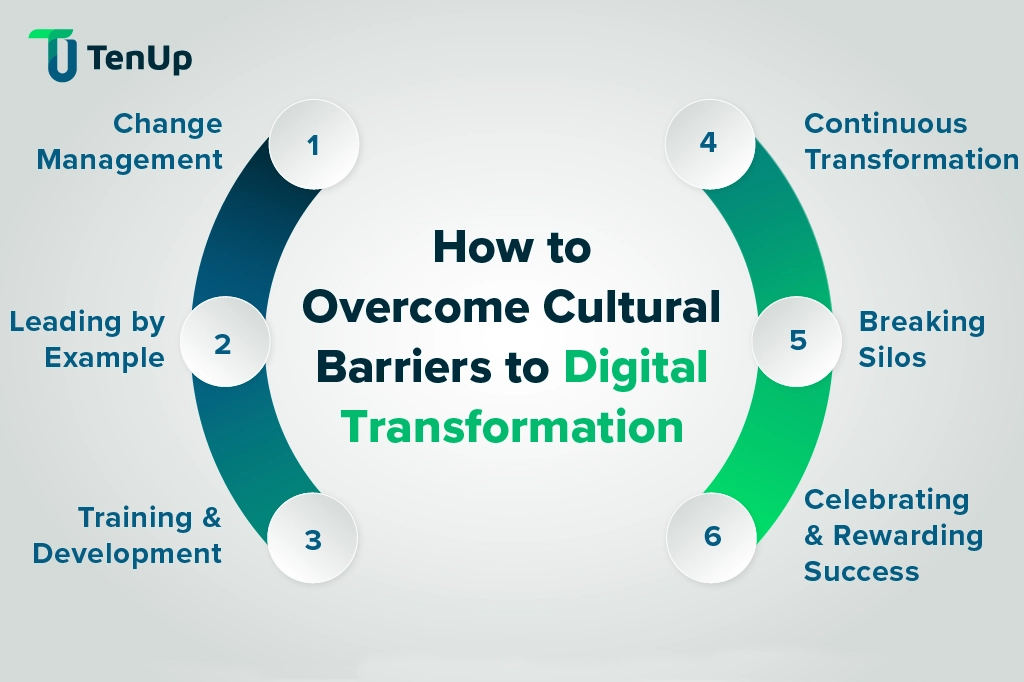
Key Strategies to Overcome Digital Transformation Challenges
Organizations can successfully address cultural barriers and support transformation by focusing on the following strategies:
- Implement structured digital transformation change management
- Strengthen leadership support and accountability
- Invest in continuous employee training and digital literacy
- Encourage collaboration and break down organizational silos
- Recognize and reward progress in transformation initiatives
Digital Transformation Change Management: Change resistance can significantly derail the progress of transformations. According to research by McKinsey, organizations that implement structured change management practices are significantly more likely to achieve their digital transformation goals.
It comes as no surprise that Forrester's Business And Technology Services Survey highlights this as one of the top five frequently encountered obstacles in digital transformation execution. In fact, 21% of global services decision-makers, responsible for supporting their organizations' digital transformation, identified the introduction of new processes and capabilities as one of the foremost challenges they face.
The Role of Leadership: Strong leadership champions digital transformation and nourishes a culture of innovation. This means leading by example and practicing what you preach.
Digital transformation starts with the senior management and they must immerse themselves in the transition. Leaders must also address the benefits of digital transformation and alleviate their fears, clarifying the value without using jargon. Often, it is necessary to realign employee roles by understanding their capabilities and allocating tasks based on coding skills, tool proficiency, and task efficiency to overcome digital transformation challenges.
Key leadership actions that support transformation include:
- Communicating the vision and benefits of digital transformation
- Addressing employee concerns about technological change
- Aligning employee roles with digital capabilities and business goals
- Encouraging innovation and cross-team collaboration
Continuous Training and Development: Companies must invest in comprehensive training programs to improve digital literacy and skills among employees as part of effective digital transformation cultural change strategies.
Instead of using canned training solutions, the learning should be tailored to each employee’s learning style, hiring internal or external resources where needed. Most importantly, continuous evaluation and assessment of the outcomes along with employee feedback helps to refine the implementation of tools and technology.
Effective training initiatives typically include:
- Digital literacy and technology adoption programs
- Personalized learning paths for employees
- Internal mentorship and external training resources
- Continuous evaluation and feedback mechanisms
Digital Transformation is a Continuous Journey: Understand that digital transformation is a continuous journey without a fixed endpoint, aiming to create a more adaptable and innovative organization.
Traditional change management falls short in this context, as it often overlooks the need to adjust incentives, reinforcing old habits. Acknowledging that not everyone benefits from transformation and openly addressing downsides is crucial for effective leadership.
Changing behaviors requires altering incentives, as routines are reinforced by performance measurements. Overcommunication can be counterproductive; successful transformation leaders prioritize listening and tailored communication.
C-suite support alone isn't enough; middle management's role is pivotal. Transformation managers must prioritize trust, honesty, and behavioral change, creating an organizational culture that confidently embraces change for ongoing success in a volatile world.
Breaking Down Silos: Breaking down silos is pivotal for successful digital transformation and overcoming digital transformation challenges, including resistance to change within organizations.
Studies consistently show that organizational culture is one of the biggest barriers to digital transformation success, emphasizing the need for strong cultural alignment and leadership support.
By promoting collaboration, holistic data management, innovation, and customer-centricity, silo breakdown enables:
- Greater organizational agility
- Improved information sharing across teams
- More efficient resource allocation
- Faster decision-making and innovation
This approach empowers employees and unifies strategies, enhancing the overall organizational culture. It promotes adaptability and innovation, essential for embracing digital advancements.
As a result, organizations can thrive in an evolving business landscape while overcoming the digital transformation challenges posed by silos.
Celebrating and Rewarding Success: Celebrating and rewarding success in digital transformation is pivotal for overcoming resistance to change by providing positive reinforcement, motivating employees, and shifting the organizational culture toward innovation.
These celebrations not only acknowledge hard work but also inspire enthusiasm and engagement, encouraging employees to become advocates for change and share valuable insights.
Benefits of recognizing transformation success include:
- Sustaining momentum in digital initiatives
- Improving collaboration and employee engagement
- Boosting confidence in transformation strategies
- Strengthening the organization's reputation for innovation
By sustaining momentum, improving collaboration, boosting confidence, and enhancing the organization's reputation, celebrations contribute to a cycle of positive change, attracting talent and fostering an environment where digital transformation thrives.
As organizations work to overcome cultural barriers, addressing legacy systems becomes essential for successful digital transformation. For insights on best practices and common pitfalls in legacy modernization, check out our blog on Legacy Modernization and Migration.
Final Thoughts: Solving Digital Transformation Challenges Through Cultural Change
Organizations aiming to succeed in digital transformation should focus on:
- Recognizing and addressing cultural barriers early in transformation initiatives
- Understanding the root causes of resistance to change
- Implementing targeted strategies that support innovation and collaboration
- Building a culture that encourages continuous learning and adaptability
Recognizing and addressing cultural barriers is not merely an option; it is a necessity for thriving in the digital age. By understanding the roots of resistance and implementing targeted strategies, organizations can break through cultural barriers.
Nurturing a culture of innovation helps them overcome the digital transformation challenges they face. This approach paves the way for a successful digital transformation journey.
Moving Forward with Digital Transformation
As a digital transformation software and services provider, we are committed to partnering with you in navigating these challenges and leveraging technology to drive meaningful and sustainable change.
Embrace the power of cultural transformation and embark on a journey that transcends technology, reshaping the very fabric of your organization for a digital future.
Need help to thrive in the digital-first economy?
We specialize in building personalized digital transformation solutions for improved business efficiency while reducing costs.
Frequently asked questions
Why is organizational culture a barrier to digital transformation, and how can technology-driven changes be addressed effectively?

Organizational culture barriers include fears such as job-role uncertainty, resistance to change, skills gaps, and siloed operations. Address these by combining strong leadership commitment, continuous upskilling, cross-functional collaboration, and psychological safety, creating an environment where employees embrace digital tools as enablers rather than threats.
How does cultural alignment support digital transformation, and what strategies ensure successful adoption across the organization?
Cultural alignment reduces resistance, accelerates adoption, and ensures long-term sustainability by matching employee behavior with digital goals. Key strategies: leadership role-modeling, communicating the "why" behind changes, involving employees early, delivering continuous tailored training, and redefining KPIs to reward collaboration and innovation over rigid legacy metrics.
What percentage of digital transformation projects fail, and what is the single biggest reason?
Between 70% to 88% of digital transformation projects fail, with Bain's 2024 study citing the higher figure. The single biggest reason isn't technology; it's cultural resistance combined with poor change management. Organizations treating transformation as an IT project rather than a people-first initiative consistently lose momentum before achieving results.
What is the difference between digitization, digitalization, and digital transformation?
Digitization converts analog data into digital formats (scanning paper invoices). Digitalization uses that data to improve processes (automated ERP workflows). Digital transformation is the broadest shift, rethinking entire business models, culture, and strategy through a digital lens. Transformation cannot happen without the first two, but extends far beyond them.
How do you measure the ROI of digital transformation?
Measure digital transformation ROI by establishing pre-transformation baselines, then tracking financial metrics (revenue growth, cost savings), operational efficiency (cycle times, automation gains), customer experience (NPS, churn rates), and employee productivity. Use the formula: Net Gain ÷ Cost of Investment × 100. Avoid expecting short-term returns; most transformation benefits compound over 2 to 4 years.
What role does middle management play in digital transformation success or failure?
Middle managers are the make-or-break bridge between executive vision and frontline execution. They translate strategy into daily workflows, champion new tools, and drive cultural adoption. However, when excluded from planning or undertrained, they become bottlenecks protecting legacy processes. Involving middle managers early as transformation champions significantly increases organization-wide adoption rates.
What is digital transformation fatigue, and how can companies prevent it?
Digital transformation fatigue is employee exhaustion and cynicism caused by continuous, overwhelming technological change without adequate adaptation time. It triggers burnout, cultural resistance, and diminished ROI. Prevent it by phasing initiatives manageably, communicating the "why" clearly, gathering regular employee feedback, and avoiding technology adoption for its own sake rather than for clear business value.
How do generational differences in the workforce affect digital transformation adoption?
Gen Z and Millennials embrace digital tools intuitively, while Gen X and Baby Boomers prefer structured, proven systems and need stronger change justification. Bridge this divide through reverse mentoring programs, blended training combining hands-on and digital learning, and framing technology as an enabler, not a replacement for existing institutional knowledge.
Share the Article


