


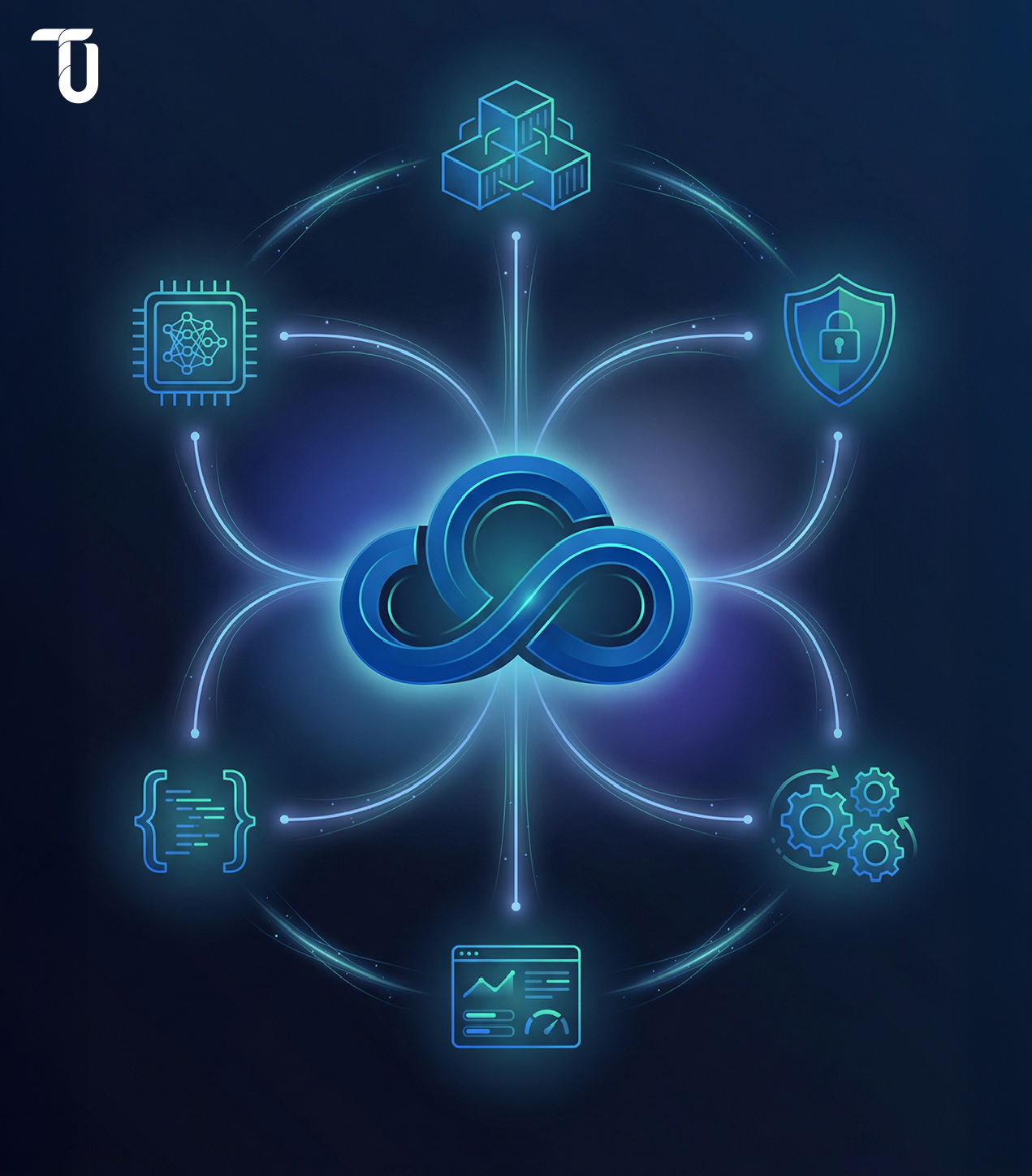
What if the cloud that once fueled your growth is now slowing it down? Global cloud spending is projected to reach $723.4 billion in 2025, reflecting a massive surge in enterprise cloud adoption. At the same time, companies waste an estimated 32% of their cloud budgets each year due to inefficiencies and poor visibility. That’s the hard truth many CTOs and CEOs are confronting in 2026. Cloud costs are climbing, compliance demands are tightening, and the tools meant to simplify operations are creating even more complexity. What used to be a competitive advantage has quietly turned into a challenge of scale, visibility, and control. Cloud engineering today isn’t about keeping systems online; it’s about keeping innovation alive. Enterprises need architectures that can scale effortlessly, supported by an enterprise cloud optimization strategy. They need security that adapts by design, and automation that frees teams to focus on outcomes. This is exactly what effective Cloud engineering solutions for enterprises are designed to deliver. This Cloud Engineering Solutions Playbook also serves as a practical cloud engineering roadmap for leaders who want to simplify the chaos and understand how to build a cloud engineering strategy for enterprises. Inside, you’ll find the tools, frameworks, and best practices that help you transform your cloud into what it was always meant to be: a catalyst for innovation and measurable business impact.
The State of Cloud Engineering in 2026
The cloud landscape in 2026 looks nothing like it did a few years ago. What started as a race to migrate has now evolved into a race to modernize, optimize, and innovate —often guided by a cloud modernization playbook.
Every enterprise wants agility, but few are truly engineered for it, even with a well-defined Cloud modernization strategy and modern cloud services.
Global cloud spending is at an all-time high, driven by the surge in AI workloads, hybrid architectures, and the rise of platform engineering teams. Yet, the challenges are just as real. For many enterprises, managing the cloud feels less like a strategy and more like survival, due to ongoing cloud engineering challenges and solutions they must navigate.
Key Challenges Enterprises Face Today:
- Rising Costs: Lack of real-time visibility and poor resource allocation continue to inflate cloud bills.
- Complex Architectures: Multi-cloud and hybrid setups are creating operational silos and integration hurdles.
- Compliance Pressures: Constantly evolving data regulations make governance and risk management tougher.
- Skills Gap: Engineering teams struggle to keep up with rapid shifts in tools, platforms, and security protocols.
The shift is clear: cloud engineering is no longer just about managing infrastructure; it is about enabling innovation at scale. Enterprises are now turning to AI-driven automation, FinOps practices, and platform engineering to simplify operations, control costs, and accelerate innovation cycles.
Success belongs to organizations that see cloud engineering as a business capability, one that drives resilience, speed, and measurable impact through the best cloud engineering solutions in 2026.
Core Pillars of Cloud Engineering Solutions
Cloud engineering is no longer about keeping systems up and running; it’s about adopting cloud engineering best practices for 2026 enterprise teams to build smarter, faster, and more resilient systems. It’s about designing a foundation where innovation never stops, security never slips, and scalability never feels like an afterthought. For CTOs and CEOs, this means rethinking the very DNA of their cloud strategy, aligning technology, people, and processes toward one common goal: sustainable growth through engineering excellence.
Let’s break down the core pillars driving cloud success in 2026 and explore some of the best cloud engineering solutions for large organizations.
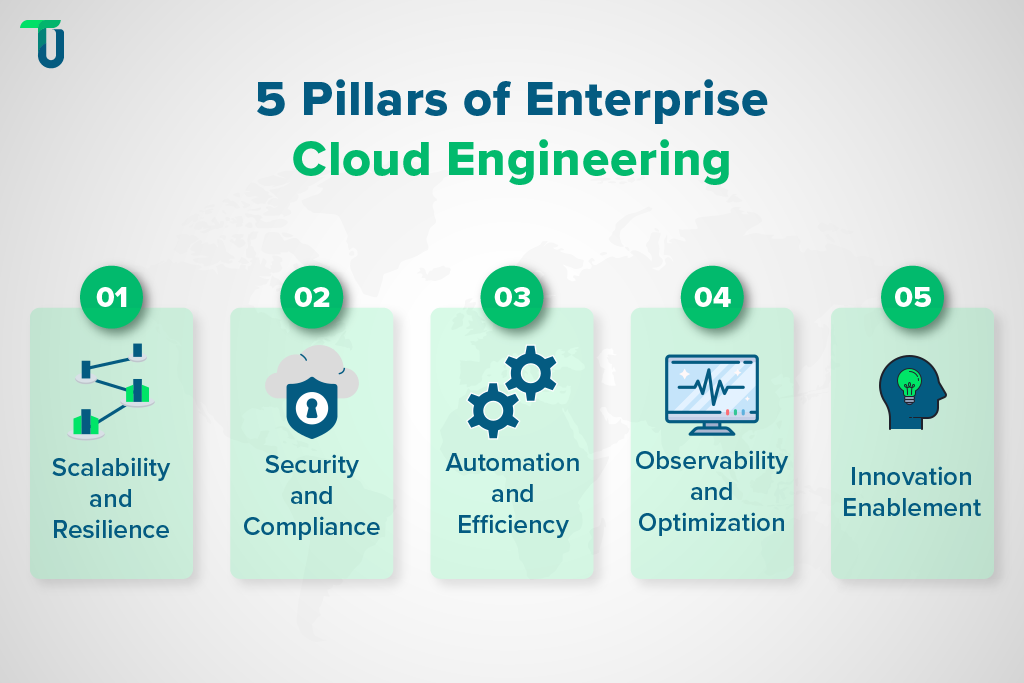
1. Scalability and Resilience: Architecting for Growth and Availability
Enterprises can no longer rely on static infrastructure models. Modern businesses demand elastic, self-healing systems that can scale up or down in real time, following proven cloud scalability best practices. From autoscaling clusters on AWS and Azure to distributed architectures powered by Kubernetes, resilience is now built into the code itself.
The key lies in designing fault-tolerant, redundant systems that not only withstand failure but learn and recover from it, ensuring uninterrupted performance even during peak workloads or outages.
2. Security and Compliance: Governance by Design
Security is no longer an afterthought; it is a design principle supported by strong cloud governance best practices, as reinforced in our cloud engineering solutions and best practices guide. With the rise of multi-cloud deployments and global data regulations, enterprises are embedding Zero Trust frameworks and governance-by-design models directly into their cloud engineering pipelines.
By automating compliance checks through tools like Prisma Cloud or Wiz and enforcing policy as code, businesses can detect vulnerabilities, manage identities, and maintain compliance without slowing innovation. In 2026, the competitive edge isn’t just faster delivery; it is secure delivery with accountability built in.
3. Automation and Efficiency: Building Smarter, Not Harder
Cloud engineering teams are moving away from manual configurations and embracing full automation. Infrastructure as Code (IaC) tools like Terraform, Pulumi, and AWS CloudFormation now form the backbone of efficient operations.
Beyond provisioning, enterprises are also leveraging AI-driven automation and DevOps pipelines to streamline deployments, reduce human error, and enable continuous delivery. The result is faster iteration, predictable scaling, and greater developer productivity, all while keeping operational costs under control.
4. Observability and Optimization: Turning Data into Decisions
In a world where every millisecond matters, visibility is power. Cloud engineering in 2026 increasingly relies on cloud performance engineering built on real-time observability using tools like Datadog, Prometheus, Grafana, and OpenTelemetry. These platforms give teams a unified view across applications, infrastructure, and costs, helping them identify anomalies before they become outages.
Observability also fuels FinOps, allowing decision-makers to tie cloud spending directly to business outcomes and understand how enterprises can optimize cloud costs with FinOps, supported by cloud cost optimization & engineering solutions. It’s not just about monitoring systems; it’s about making every byte and every dollar accountable.
5. Innovation Enablement: The New Core of Cloud Strategy
The most successful enterprises treat the cloud as a launchpad for innovation. By leveraging serverless architectures, containers, and microservices, they’re building modular, agile systems that accelerate experimentation and time to market.
From deploying AI models at scale to integrating edge computing for real-time data processing, cloud engineering has evolved into an innovation powerhouse. The focus is clear, empowering teams to build, test, and scale new ideas without infrastructure constraints.
Turn Cloud Complexity into Competitive Advantage
Modernize your architecture, optimize cloud spend, and build secure, scalable platforms designed for enterprise growth in 2026 and beyond, with TenUp Software Services.
Essential Cloud Engineering Tools for 2026
In 2026, the modern enterprise cloud ecosystem is a blend of automation, intelligence, and accountability. The right tools don’t just simplify engineering—they accelerate decision-making, strengthen reliability, and fuel innovation. For CTOs and CEOs, selecting the right mix of technologies is about balancing performance, security, and cost, while enabling teams to innovate fearlessly—often starting with a deeper understanding of what cloud engineering solutions for enterprises truly entail.
Here’s a closer look at the tools shaping the future of cloud engineering in 2026.
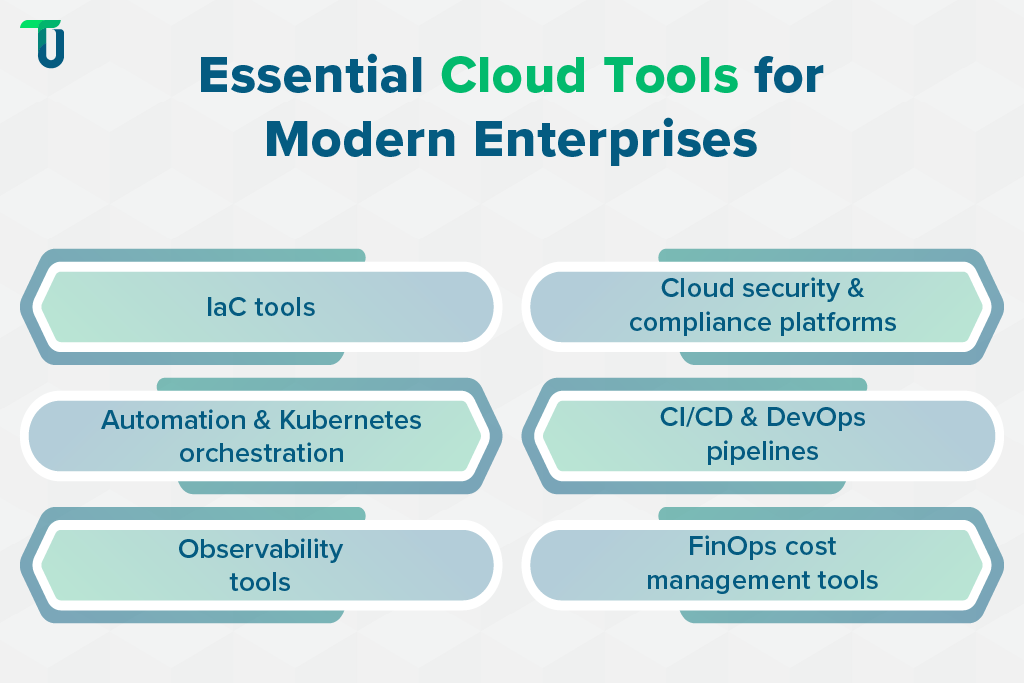
1. Infrastructure as Code (IaC): Terraform, AWS CloudFormation, Pulumi
The foundation of any scalable cloud strategy begins with Infrastructure as Code.
- Terraform: Known for its cloud-agnostic flexibility, Terraform allows enterprises to manage complex multi-cloud environments from a single configuration file. It brings version control to infrastructure and ensures consistency across dev, staging, and production.
- AWS CloudFormation: The go-to for AWS-heavy ecosystems, CloudFormation automates resource provisioning with precise templates, reducing manual errors and ensuring compliance with enterprise standards.
- Pulumi: A developer-friendly IaC tool that allows teams to use familiar languages like Python, TypeScript, or Go to define and deploy infrastructure. It bridges the gap between developers and ops, accelerating innovation cycles.
Together, these tools turn cloud management into code-driven operations, ensuring faster deployments and fewer surprises.
2. Cloud Automation and Orchestration: Amazon EKS, Ansible, Kubernetes, Helm
Automation is the heartbeat of efficient cloud engineering. These tools make it possible to manage scale and complexity without manual intervention.
- Amazon Elastic Kubernetes Service (EKS): Simplifies Kubernetes management by automating cluster provisioning, scaling, and patching, while maintaining enterprise-grade security.
- Ansible: A powerful orchestration tool for automating cloud configurations, app deployments, and workflow management—ideal for hybrid environments.
- Kubernetes: The gold standard in container orchestration, Kubernetes enables seamless scaling, self-healing applications, and efficient resource utilization across environments.
- Helm: Often called the “package manager” for Kubernetes, Helm simplifies deployment with pre-built charts, making complex workloads reproducible and manageable.
These tools empower cloud teams to build systems that are automated, resilient, and adaptive, similar to modern enterprise cloud automation solutions.
3. Monitoring and Observability: Datadog, Prometheus, Grafana, OpenTelemetry
Visibility drives reliability, and these tools help enterprises see the full picture.
- Datadog: A unified platform for monitoring infrastructure, logs, and APM metrics in real time. It helps enterprises detect anomalies faster and tie performance issues directly to business outcomes.
- Prometheus: An open-source monitoring tool designed for dynamic, cloud-native environments. Its metric-based approach enables proactive issue detection and alerting.
- Grafana: A visualization powerhouse that transforms metrics and logs into intuitive dashboards. It’s essential for analyzing trends and maintaining system health across distributed applications.
- OpenTelemetry: The industry standard for collecting and exporting telemetry data. It integrates seamlessly with major observability platforms, ensuring consistent insight across microservices and clouds.
Together, they form the backbone of modern observability, where every action, event, and cost has a measurable insight attached.
4. Security and Compliance: CloudGuard, Prisma Cloud, Wiz, Check Point
Security in 2026 is not reactive, it’s engineered. These tools embed governance and protection directly into your cloud ecosystem.
- CloudGuard (by Check Point): Offers advanced threat prevention, compliance posture management, and network security tailored for hybrid and multi-cloud environments.
- Prisma Cloud (by Palo Alto Networks): Provides a comprehensive view of cloud security across workloads, containers, and APIs with automated policy enforcement and compliance reporting.
- Wiz: The rising star in cloud security, Wiz delivers agentless, real-time visibility into cloud assets, vulnerabilities, and misconfigurations, making it a favorite among modern CISOs.
- Check Point: A trusted leader in network security that now extends protection to cloud-native applications, ensuring zero-trust enforcement across distributed systems.
These platforms ensure your cloud is not just fast and flexible but also secure and compliant by design.
5. CI/CD and DevOps Pipelines: GitHub Actions, GitLab CI, Jenkins X
Speed means nothing without stability, and that’s where CI/CD tools come in.
- GitHub Actions: Seamlessly integrates with repositories, enabling teams to automate testing, builds, and deployments directly from GitHub.
- GitLab CI: A complete DevOps platform that combines code management, CI/CD pipelines, and security scanning in one unified workflow.
- Jenkins X: A Kubernetes-native CI/CD solution designed for cloud-native applications, automating everything from code commit to deployment.
These tools empower teams to ship faster with confidence, ensuring that every update, patch, or new feature is tested, secure, and production-ready.
6. Cost Management and FinOps: CloudHealth, nOps, Azure Cost Management
Cost optimization has evolved from finance oversight to a full-fledged engineering discipline.
- CloudHealth (by VMware): Provides detailed cost analytics and policy-driven optimization to help enterprises align cloud spending with business goals.
- nOps: A FinOps automation tool that integrates with AWS and Azure to detect waste, automate savings, and provide actionable cost intelligence in real time.
- Azure Cost Management: Microsoft’s native solution that offers visibility, budgeting, and forecasting tools to keep multi-cloud expenses in check.
These tools empower decision-makers to turn cloud costs into strategic investments, ensuring every dollar spent translates into measurable value.
Proven Frameworks for Cloud Engineering Success
The right frameworks bring structure, scalability, and accountability to every stage of your cloud journey, helping enterprises align innovation with business outcomes. Here are the proven frameworks that define cloud engineering excellence in 2026.
1. Well-Architected Frameworks: AWS WAF, Azure CAF, and Google Cloud Architecture Framework
A strong foundation starts with well-architected principles — an approach further detailed in our Cloud engineering services & solutions playbook.
- AWS Well-Architected Framework (WAF): Built around five pillars - security, reliability, operational excellence, performance efficiency, and cost optimization. It helps teams continuously assess workloads and fix architectural weaknesses early.
- Azure Cloud Adoption Framework (CAF): Guides enterprises through every stage of adoption, from governance setup to continuous optimization, ensuring scalability and compliance from day one.
- Google Cloud Architecture Framework: Offers prescriptive blueprints for designing secure, performant, and resilient systems with built-in monitoring and cost control.
These frameworks help cloud teams standardize excellence across platforms, keeping innovation grounded in reliability.
2. Cloud-Native Architecture Principles: Built for Agility and Speed
In 2026, agility is everything. Cloud-native architectures allow enterprises to innovate faster, deploy seamlessly, and scale on demand.
- Microservices: Enable modular development and independent scaling for faster time to market.
- Serverless Computing: Frees developers from infrastructure management while optimizing resource utilization and cost.
- Container-first Approach: Tools like EKS for Kubernetes orchestration and RDS for databases help ensure portability, consistency, and automation across hybrid environments.
With these principles, enterprises design systems that are not only agile but also ready for whatever’s next.
3. Security by Design: Zero Trust, NIST Cybersecurity, and CIS Benchmarks
Security can’t be bolted on, it must be built in. Modern enterprises are embedding security controls directly into the engineering pipeline.
- Zero Trust Model: Focuses on continuous authentication and identity-based access, ensuring protection across users, APIs, and workloads.
- NIST Cybersecurity Framework: Provides a structured method to identify, protect, detect, and recover from incidents.
- CIS Benchmarks: Offer configuration best practices to secure cloud workloads and minimize vulnerabilities.
This proactive approach ensures that every deployment is secure, compliant, and auditable from the start.
4. FinOps Framework: Turning Cost into Strategy
FinOps isn’t just about cost-cutting, it’s about creating accountability. The framework helps organizations align engineering performance with financial visibility.
- Promotes real-time cost tracking and actionable insights.
- Encourages collaboration between engineering, finance, and business teams for balanced decisions.
- Enables automation and continuous optimization through defined cost guardrails.
With FinOps, cloud spending becomes a growth enabler, not a line item of concern.
5. SRE Principles: Reliability as a Competitive Advantage
Reliability is the new performance metric. Site Reliability Engineering (SRE) turns operations into a measurable, scalable discipline.
- Error Budgets: Help teams find balance between speed and stability.
- Automation-Driven Operations: Reduce manual effort while improving uptime and system performance.
- Continuous Monitoring: Ensures proactive detection, faster recovery, and consistent user experience.
SRE helps enterprises engineer reliability into every process, building systems that are fast, dependable, and built to scale.
To learn how Site Reliability Engineering drives performance and customer satisfaction, explore our detailed guide on Boost DevOps Performance and Customer Satisfaction with Reliability Engineering. It dives deeper into how SRE principles translate reliability into real business value.
Best Practices to Engineer Cloud Success at Scale
Scaling in the cloud is no longer about capacity; it is about control, guided by pre and post deployment cloud best practices that ensure systems adapt, secure themselves, and deliver measurable value without adding cost or complexity. Enterprises need systems that adapt, secure themselves, and deliver measurable value without adding cost or complexity. The goal is clear: engineer a cloud ecosystem that is agile, resilient, and ROI-driven.
Here’s how leading organizations are making that happen.
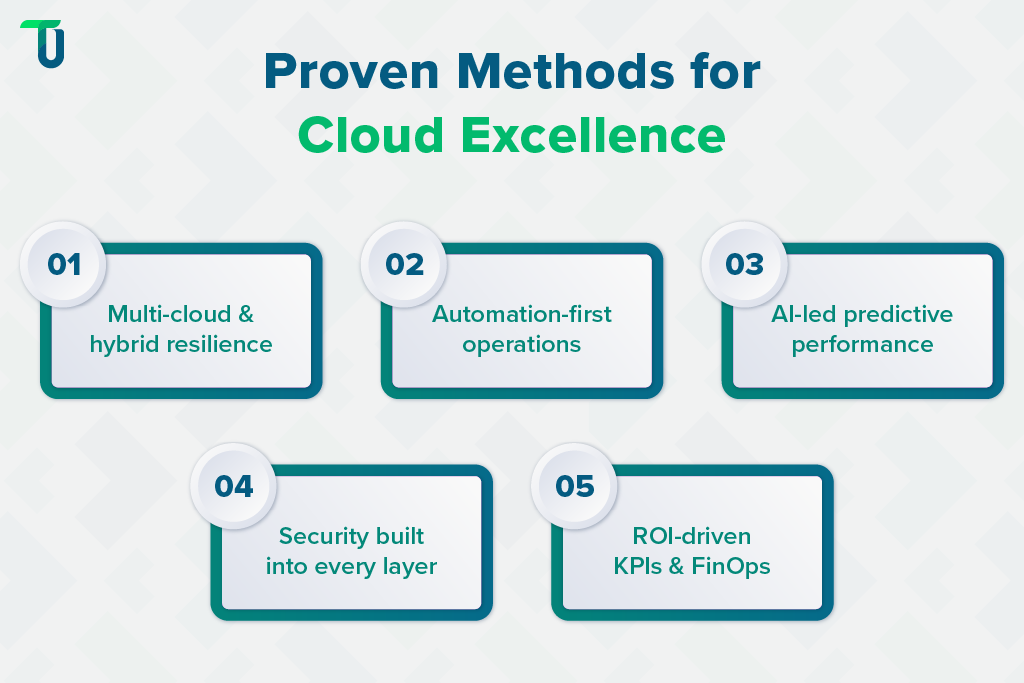
Design for Multi-Cloud and Hybrid Resilience
Vendor lock-in is out, and flexibility is in. Enterprises are adopting multi-cloud and hybrid architectures to balance performance, cost, and compliance. This approach distributes workloads across platforms like AWS, Azure, and GCP, ensuring that one failure never impacts availability.
The rise of the supercloud, a unified operational layer across multiple environments, helps enterprises achieve centralized governance, seamless interoperability, and better visibility across distributed systems.
2. Embed an Automation-First Culture
Manual operations cannot keep up with the pace of digital transformation. Leading enterprises are embedding automation-first practices across engineering, from infrastructure provisioning with IaC to CI/CD pipelines and monitoring.
With AI and AIOps, teams are automating repetitive tasks, predicting incidents, and self-healing in real time. The result is faster innovation, fewer errors, and improved operational consistency.
3. Leverage AI and ML for Predictive Cloud Operations
AI has become the silent driver of modern cloud management, supported by emerging AI-driven cloud engineering tools for predictive operations that automate insights and enable proactive decision-making. Using machine learning and predictive analytics, enterprises can forecast demand, detect anomalies, and optimize workloads automatically—reinforced by automation insights highlighted in this Enterprise cloud performance and optimization guide.
By integrating AI-powered observability tools, cloud teams can move from reactive issue management to proactive performance optimization, ensuring reliability and cost control.
4. Build Security into Every Layer
Security can no longer be treated as a final step. Enterprises are building security-by-design architectures, embedding protection at every layer, from infrastructure to code.
Automated compliance checks, policy as code, and zero trust frameworks ensure continuous protection while maintaining agility. When security becomes intrinsic to engineering, innovation and governance move in sync.
5. Establish KPIs and ROI Metrics that Matter
Engineering excellence needs measurable outcomes. Forward-looking organizations track key KPIs like availability, performance, and cost efficiency to assess cloud maturity.
Metrics such as MTTR (Mean Time to Recovery), cost per transaction, and deployment frequency connect engineering performance with business results. With FinOps alignment, every optimization directly translates into quantifiable business value.
Real-World Use Cases and Success Stories
Leading enterprises across industries are applying cloud-native design, automation, and AI-driven engineering to achieve resilience, scalability, and innovation at scale. These stories prove one thing: when engineering meets strategy, the cloud becomes a true business accelerator.
1. Netflix: Redefining Resilience Through Cloud-Native Engineering
Netflix has set the global benchmark for resilient cloud systems. Built entirely on AWS, its platform leverages microservices, chaos engineering, and observability-first practices to ensure seamless performance for over 260 million users.
Their engineering teams use Infrastructure as Code (IaC) and self-healing architectures to handle unpredictable workloads without downtime. With tools like Chaos Monkey, Netflix tests system reliability continuously, turning resilience into a competitive advantage.
Key Impact:
- Zero downtime across 190+ countries
- Automated resilience testing and failover recovery
- Cloud cost optimization through smart scaling
2. Spotify: Platform Engineering That Powers Innovation
Spotify’s cloud journey is a masterclass in platform engineering. By migrating over 1,200 services to Google Cloud, they built a unified infrastructure supported by Kubernetes, CI/CD pipelines, and an internal developer platform called Backstage.
This approach did not just simplify infrastructure management; it empowered developers to ship features faster while maintaining consistency, security, and scalability across environments.
Key Impact:
- 2x faster deployment cycles
- Unified developer experience with standardized tooling
- Enhanced scalability and observability across teams
3. Capital One: Security and Compliance Engineered for the Cloud
Capital One became one of the first major financial institutions to go all-in on cloud by adopting AWS. Their engineering teams embedded Zero Trust architecture, policy as code, and automated compliance frameworks to maintain data integrity while accelerating innovation.
With a strong DevSecOps foundation, Capital One engineers now deploy secure workloads faster, audit-ready by default, and resilient against evolving cyber risks.
Key Impact:
- 99% reduction in manual security reviews
- Real-time compliance with financial regulations
- Faster feature releases with embedded security
The Future of Cloud Engineering Solutions
Cloud engineering is evolving from managing infrastructure to engineering intelligence. In 2026 and beyond, the focus is on AI-driven automation, platform engineering, edge convergence, and sustainability, turning cloud ecosystems into engines of continuous innovation and measurable value.
1. AI-Powered Engineering Assistants (AIOps & GenAI)
AI is reshaping how cloud systems are built and maintained. AIOps and Generative AI now automate monitoring, predict failures, optimize costs, and even generate infrastructure code—capabilities aligned with principles highlighted in this Enterprise cloud performance and optimization guide.
Why it matters: AI-led engineering reduces downtime, improves efficiency, and accelerates delivery across DevOps and FinOps pipelines.
2. Platform Engineering: The Next Evolution of DevOps
Enterprises are adopting platform engineering to simplify operations. These self-service platforms combine automation, security, and observability to give developers faster and safer deployment paths.
Why it matters: It turns DevOps complexity into reusable, scalable workflows that boost developer productivity and innovation.
3. Edge Cloud Convergence: Real-Time Agility
As industries demand real-time insights, edge computing is blending with the cloud. AI and analytics at the edge enable low-latency processing and autonomy for IoT, healthcare, and manufacturing.
Why it matters: It drives faster decisions, greater reliability, and next-generation customer experiences.
4. Sustainable Cloud Engineering
Sustainability is becoming a core engineering principle. GreenOps and energy-aware architectures optimize resources and reduce carbon footprints.
Why it matters: It cuts costs while aligning cloud innovation with environmental and ESG goals.
Why Choose TenUp Software Services for Cloud Engineering
At TenUp Software Services, we don’t just build on the cloud; we engineer it for measurable impact. Our approach is built around precision, scalability, and business alignment, helping enterprises move from cloud adoption to cloud excellence.
We design custom cloud strategies that align with your goals, ensuring smooth migration, optimized costs, and long-term performance. Our end-to-end cloud engineering services span application modernization, DevOps automation, API integration, and cloud-native development, all secured with Zero Trust frameworks and policy as code governance.
With expertise across AWS, Azure, and hybrid environments, we enable faster delivery, continuous optimization, and intelligent scalability. Backed by a transparent, agile delivery model and a proven track record of success, TenUp Software Services helps enterprises innovate confidently and scale sustainably.
Choose TenUp Software Services to turn your cloud vision into a future-ready ecosystem that accelerates growth, ensures resilience, and drives innovation.
Transform Complexity into Cloud Confidence
Don’t let fragmented systems slow your growth. With TenUp Software Services, simplify operations, embed automation, and gain complete visibility into your cloud ecosystem.
Frequently asked questions
How do I know if our current cloud engineering setup is actually slowing innovation instead of enabling it?

Your cloud setup is slowing innovation if engineers spend more time fixing issues than shipping features. Clear signs include slow releases, frequent hotfixes, rising costs, and fragile pipelines. If deployments feel risky, budgets spike unexpectedly, or teams keep creating “workarounds,” your cloud foundation is holding you back. A healthy setup makes deployments routine, experiments fast, and costs predictable—not a constant firefight.
What’s the first 90-day roadmap to modernize cloud engineering in an enterprise?
A successful 90-day plan focuses on assessment, standardization, and automation—not a full rebuild.
- Days 1–30: Assess & baseline: Map critical workloads, tools, security gaps, and top cost drivers. Align engineering goals with business outcomes.
- Days 31–60: Standardize foundations: Create Landing Zones, golden architectures, tagging standards, and IaC templates so teams work from consistent, secure patterns.
- Days 61–90: Automate & validate: Introduce CI/CD, observability dashboards, and core KPIs (availability, MTTR, cost per service). Run one pilot migration to prove value quickly.
Should we go all-in on one cloud or stay multi-cloud in 2026?
The best approach for 2026 is to anchor on one primary cloud for simplicity and speed, and use multi-cloud only where it delivers clear advantages, like better AI services, compliance needs, or pricing benefits. A light “supercloud” layer for identity, observability, and FinOps gives you portability without the complexity of full multi-cloud.
How do FinOps and cloud engineering teams actually work together in high-maturity organizations?
In mature organizations, FinOps sets the guardrails (budgets, tagging, cost alerts) while engineering owns the technical choices that drive spend. These standards are built directly into IaC, CI/CD, and dashboards so cost awareness becomes part of everyday engineering work. The focus shifts from total spend to cost per outcome, creating shared accountability and eliminating surprise bills.
What’s the difference between DevOps, SRE, and platform engineering in a modern cloud organization?
DevOps is the culture that improves collaboration and delivery speed.
SRE is the discipline that ensures reliability using SLOs, automation, and error budgets.
Platform engineering builds the internal developer platform—the “paved road” of templates, tools, and workflows that lets teams ship fast without dealing with infrastructure.
Together: DevOps sets the culture, SRE protects reliability, and platform engineering provides the engine that scales both.
How can we use AI and AIOps in cloud engineering without creating a “black box” we can’t control?
Use AI as an assistant, not an autopilot. Start with safe tasks like alert reduction, summaries, and right-sizing suggestions, and keep humans approving any automated changes. Log every recommendation, version AI playbooks like code, and make all actions auditable. This gives you AI speed without losing clarity or control.
What cloud engineering KPIs matter most to CEOs and boards, not just to engineers?
CEOs care about business impact, not infrastructure details. The KPIs that matter most are:
- Reliability: Uptime, SLO performance, and revenue impact of incidents
- Speed: Lead time for changes, deployment frequency, and time-to-market
- Efficiency: Cost per user, cost per transaction, and overall unit-cost trends
- Risk & Security: Critical misconfigurations, time to remediate, and compliance health
When cloud metrics are framed this way, leadership sees cloud engineering as a driver of growth and resilience, not just an operational cost.
How do we build a high-performing cloud engineering team when talent is scarce?
Focus on the right mix of skills, not unicorn hires. High-performing teams blend T-shaped generalists with a few deep specialists:
- 40–50%: engineers strong in one cloud + solid Linux, networking, and IaC
- 20–30%: specialists in security, data, or SRE
- A small platform team to build golden paths, tools, and documentation
Support this with a clear skills roadmap—certifications, internal labs, game-days, and automation—so engineers grow fast and avoid repetitive work.
Share the Article


